
Moving on from the rifle itself, we come to the question of ammo. I intend to do a lot more with load development this year for the .260. But early results have been great and are helping me decide the path forward, as you’ll see.
The .260 Remington works best with bullet weights between 120gr. and 140gr. My intended bullet for the LRP was the 129gr. Hornady SP, but I was also looking at the 120gr. Hornady GMX. The 129gr. is a good bullet for medium game, but it has failed to exit at high impact velocities. To round things out, I decided to include the 140gr. Sierra Game King BTSP in my testing as well.
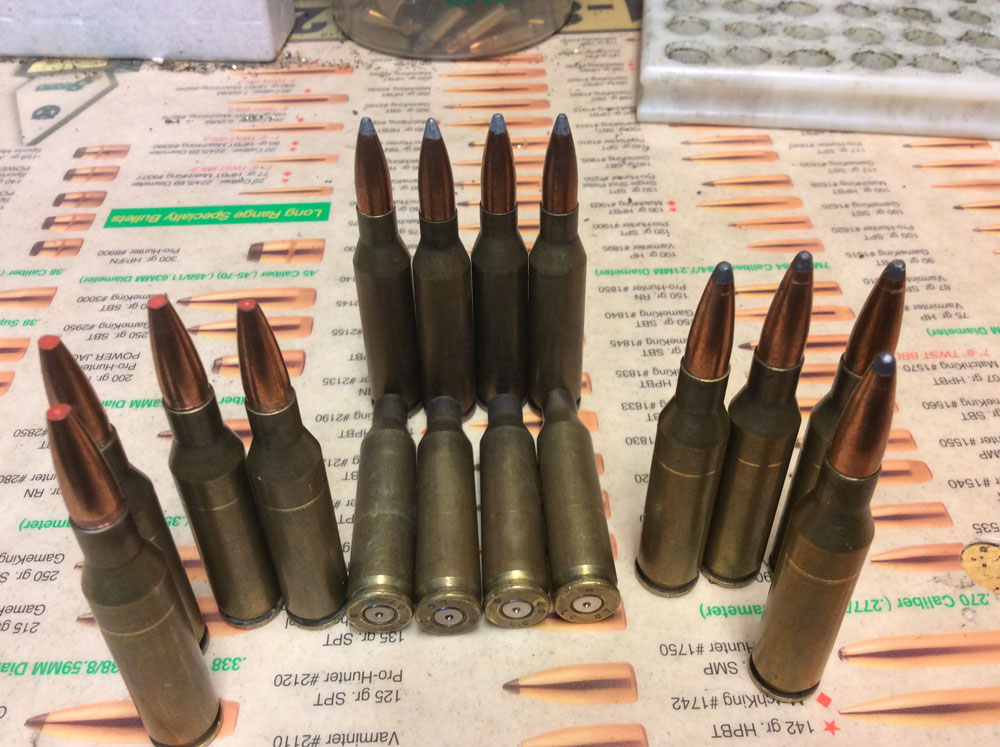
In the end, I hoped to find one bullet that I can use for all my intended game.
The .260 Remington is excellent for medium game and adequate for larger game. So, the premium bullets would allow me to shoot with confidence on elk or red deer should the opportunity arise. I am likely to add a premium 130-140gr. bullet just for that purpose. For now, this lineup of bullets would do for my purposes.
When not using my .308s, I typically default to one of my 6.5s, so I’ve got experience with the 129gr. and 140gr. soft points. I’ve come to expect good results from both bullets. Meanwhile, the 140gr. bullets have been stopping game for me for almost 20 years off and on.
The 129gr. Hornadys are a more recent addition as my long-range competition load is a 130gr. This allows me to simply swap bullets and keep powder charges the same. To their credit, they accounted for a fat 3x3 mule deer with a complete pass-through out to 350 yards.
The cases are Lake City 7.62x51 converted to .260 Remington. For powder, I’ve had good luck with Hodgdon H414 in my .260 loads. For this rifle, I also wanted to try out Hodgdon’s Superformance for the shorter barrel.
With some exploratory loads, the Superformance seemed like a good fit. After some more thorough testing, the new upper has delivered accuracy and velocity that is more than acceptable. So much so that Superformance has become my powder for all my 260s. The velocities out of the short 18” barrel are on par with a standard 22-24”.
Now, let’s get into the loads themselves.
I purposefully limited myself to loads for 120gr., 129gr., and 140gr. bullets I’d selected. These are the most common weights and allow a broad spectrum of uses. I may try 125gr. and 160gr. later, but for now, these are my go to weights for 6.5mm.
The starting load data for all of these was extrapolated from the Hornady loading manual. I reduced each recipe by three grains due to using Lake City brass instead of commercial brass. The loads were then increased until slight pressure signs developed on the cases. At that point, I dropped the load .5 grain and reshot to ensure no excessive pressure signs were evident. If the reduced load showed no evidence of adverse pressures, then that’s where I stopped.
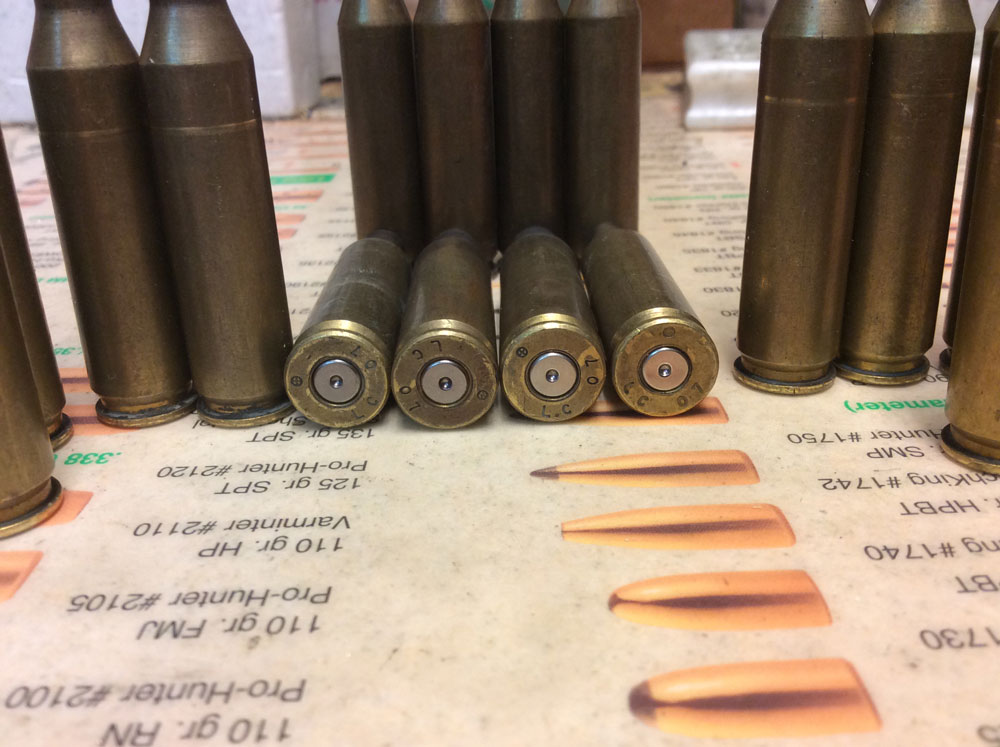
I’ll also note here that I had to modify the 120gr. GMX bullets by clipping the tips a bit. Otherwise, the bullet occupied too much of the case and wouldn’t function reliably through a Magpul magazine.
I chrono’d all loads for ten shots at ten feet in typical central Texas winter conditions: 55°F and 40-50% humidity. I then shot them all again at 85°F in 70-80% humidity. They averaged as follows:
| 55°F / 40-50% RH | 85°F / 70-80% RH | |
|---|---|---|
| 120gr. Hornady GMX | 2915 fps. | 2904 fps. |
| 129gr. Hornady SP | 2810 fps. | 2790 fps. |
| 140gr. Sierra Game King | 2696 fps. | 2704 fps. |
I am quite satisfied with the velocity results—very consistent given the temperature and humidity difference. I noted no excessive pressure signs either. Accuracy ranged from a 1/2” group to a 1” group at 100 yds. All in all, I’d say we have a good walk-and-stalk rifle.
As mentioned earlier, I entrusted one of my visiting Scandinavian friends with the new .260 over their Thanksgiving visit. In his hunting, he was able to collect a nice whitetail buck, a coyote, a couple of feral pigs and a javelina.
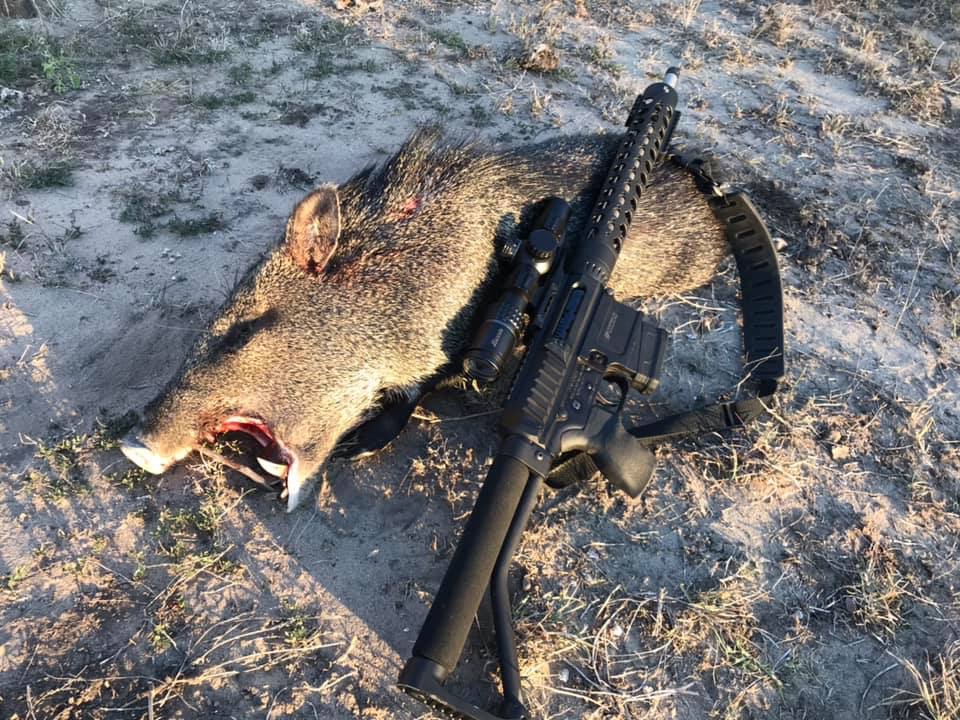
A very nice test run.
The 120gr. GMX performed great as an all-purpose medium game bullet. He took the deer as it faced head-on with a slight angle. The bullet exited, and the deer never took a step.
After seeing the performance of the GMX, I’ve decided that it’s my one-and-only bullet for this gun (at least for now).
I’m glad my visiting friends enjoyed themselves and had such great success. Little did they know how much they were helping me to gather all the information and results for this article. I would never have been able to get as much use from the guns and load data by myself.
It was quite a lot of fun to put this gun together and develop loads. Choosing optics, bullets, and powders was very enlightening and informative. Today’s sportsman has a vast array of choices and can either specialize or generalize in them.
Since I was going for general purpose, I wanted a wide area of usefulness for my optic, caliber, and bullet. So, if hindsight is 20/20, then I think I nailed it.
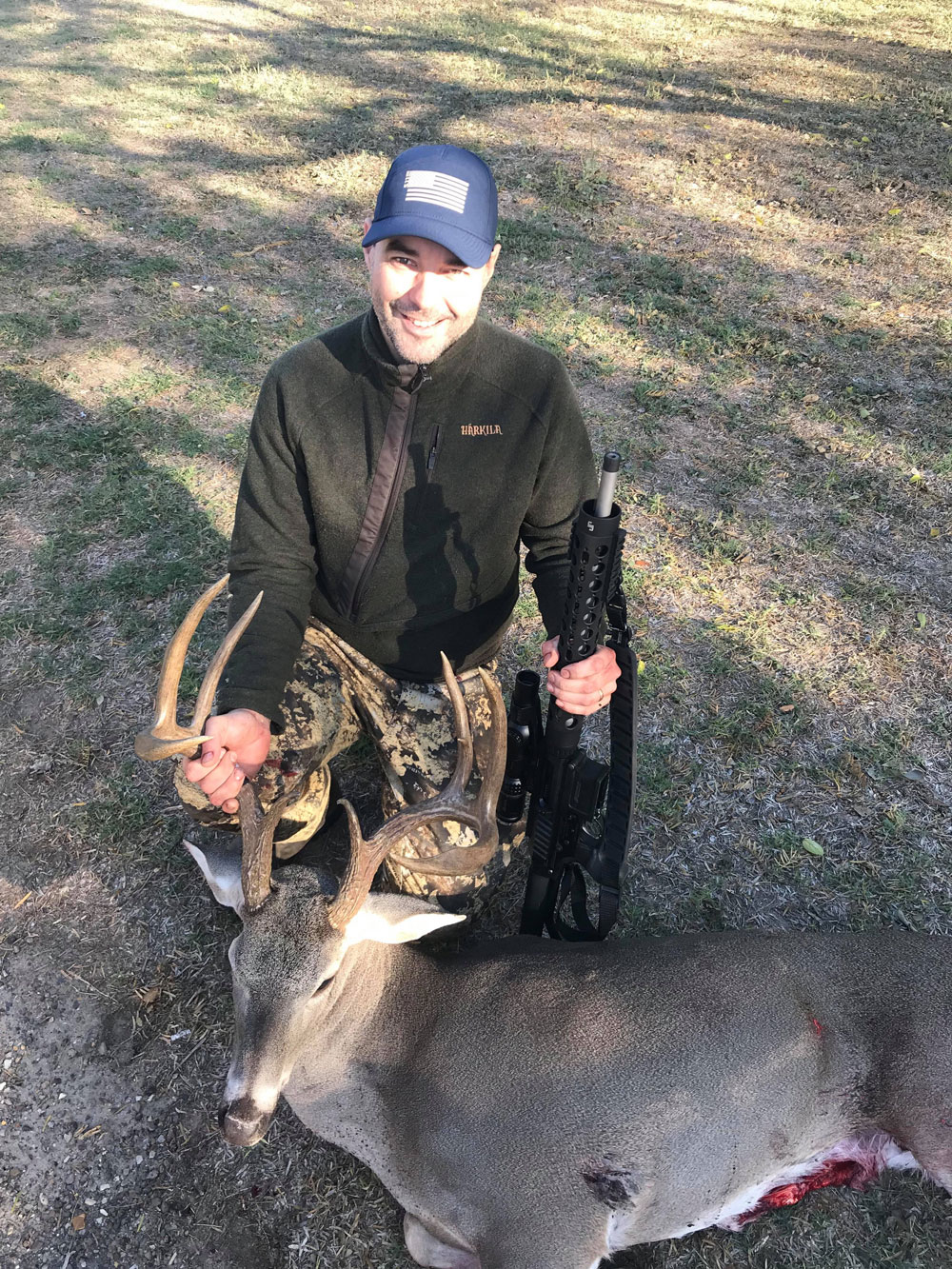
It was great to see the viability of this rifle proven in the field. The availability of modern propellants really allowed me to utilize a shorter barrel and still maintain very adequate velocity. Of course, the .260 Remington and all other 6.5s use bullets that have taken game all over the planet, some of the largest on the planet even.
W.D.M. Bell, the well-known elephant hunter, used a 6.5x54 MS for close to 300 of his elephants. It pushed a 140-160gr. bullet at 2200- 2400fps. The .260 Remington produces this easily (not that I’m going after elephants any time soon).
The small 6.5s have been cleanly taking game for over a century. So, they are not new to the world’s hunting fields.
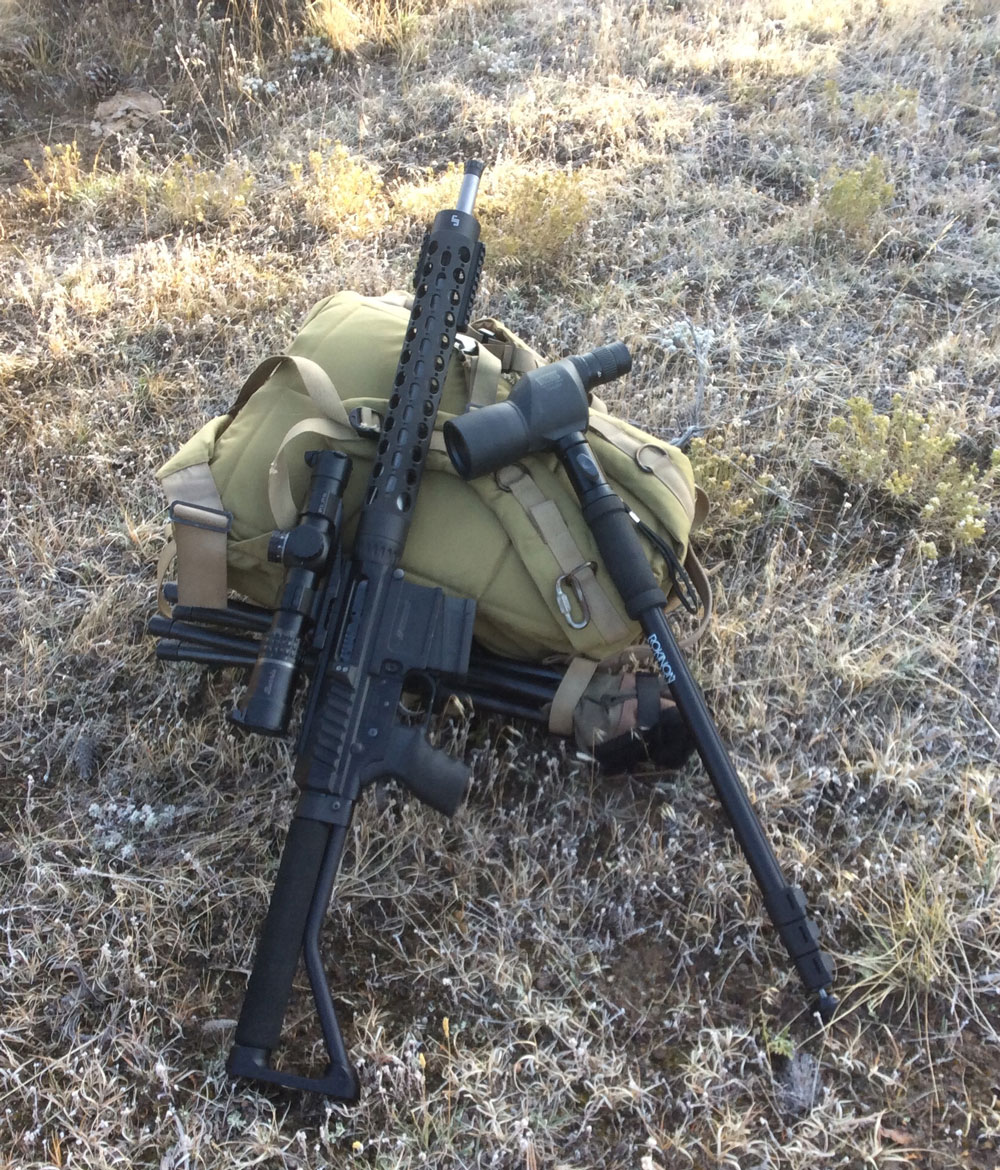
But it’s one thing to know that. It’s another to see an MSR live up to it, and one that I wasn’t 100% sold on to begin with. Thankfully, it lived it up to my hopes and exceeded by expectations.
I truly don’t feel that hunting with an AR is a compromise in any way. It’s not a lesser experience.
A major benefit of the MSR is just in the rifles themselves. They are about as weather-resistant as you can get and built for abuse while maintaining function and accuracy. The gun is made up of mostly aluminum and stainless steel with the other parts rarely exposed to the environment.
These are normal happenings in the course of a 3-Gun match. And yet, the gun platform continues to excel. What more could you want in a ruff-tuff-ready-for-stuff hunting rifle?
For many years, whenever a new AR manufacturer would appear in the 3-Gun game, the inevitable comments would follow. Everything was always “as good as a JP.” Or people would ask, “how does it compare to a JP?”
JP has always been first class and cutting edge in competition, now we can add the hunting market. Take it from a guy who knows.

Want to be kept up to date with the latest news from JP Enterprises?
Want access to the latest exclusive deals?
Click below to subscribe to the JP BULLETin.

Social Media